
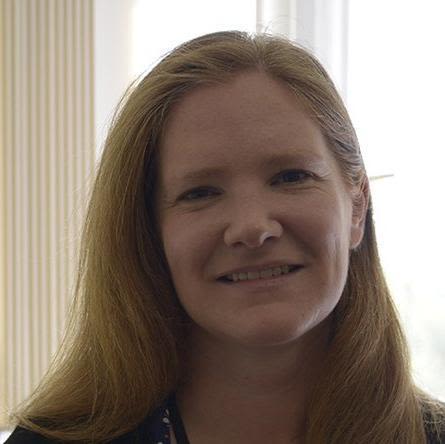
We are thrilled to announce … Our very own lead researcher Dr Helen Townley is now Professor Helen Townley!
Helen has been the William Dodd Research Fellow for some years but was recently promoted to Professor!
We are thrilled with the progress of the research and the dedication of Professor Townley’s team!
Congratulations Professor Townley!!
Below is a research update directly from our own Professor… Did I mention we have a Professor??!! 🤣
Your ongoing support of Williams Fund has done this…
Nanomedicine is a new branch of medicine which applies nanotechnology to imaging, diagnosis and treatment. In our lab we produce nanoparticles from a variety of materials such as silica, silver, gold, iron, and proteins. They are all less than 100 nm; a nanometre being one billionth of a metre (0.000000001 m) which makes Shaquille O’Neal 2,160,000,000 nanometres tall!
One type of nanoparticle that we have been making in the lab is made from melanin. This is the pigment found naturally in the body in freckles. Melanin has a high affinity for iron and melanin nanoparticles can enter cancer cells and bind the iron. Cancer cells need much higher levels of iron than other cells because they reproduce more rapidly. Since iron is such a vital element in the body an overall reduction would not be possible, but this targeted reduction can kill the cancerous cells (read more of our work here: https://link.springer.com/article/10.1007/s10856-018-6190-x).
Another type of nanoparticle that we are investigating is made from iron oxide. When very small iron oxide nanoparticles are synthesized they become paramagnetic, and application of an external magnetic force can result in the nanoparticles heating up. This means that nanoparticles which have previously been localised to cancerous cells can be activated from outside the body with no side-effects. This has been used before for hyperthermia where cells are heated up to a point that they die. However, we have designed a more sophisticated controlled-release mechanism which can be used to give multiple therapeutic doses without further medical intervention. This can help to prevent resistance which can build up when there are large gaps between treatments and drug concentrations become too low.
(Note from Johanna … this means less invasive treatment and less visits to hospital, less side effects and more efficacy from a sustained personalised programme! How cool is that!!)
Cancerous cells are also known to have altered metabolisms and to express different markers to normal cells. The metabolic changes result in the acidification of tumours and so we are working with pH sensitive polymers for controlled release of chemotherapy drugs only at the site-of-action to avoid the debilitating side-effects of chemotherapy and to permit much higher localised concentrations. Targeting can take a number of forms but we are currently making a library of aptamers. Aptamers work in a similar way to antibodies but are made from DNA instead of protein. They have a number of advantages: they are ten times smaller than antibodies and so can more easily cross membranes and the barrier into the brain, they are not immunogenic, are very stable at room temperature, and are cheap to produce and in large quantities. We have raised aptamers against NELL1 and ELMO1 proteins. These are highly expressed in Rhabdomyosarcoma and can be used to target the therapeutic nanoparticles to those cells.
While the nanoparticles themselves can be used therapeutically they can also carry cargo such as chemotherapy drugs. We are particularly interested in testing new compounds against our library of paediatric cancer cell lines. We are currently working on compounds which have been isolated from plants by our collaborators in Naples University. Compounds can be seen to behave very differently in cell lines which originated in adults, and those from children. Some of these compounds are far too toxic to be used as conventional chemotherapy because they cause too much damage to other organs in the body. However, targeted and controlled release means that these very promising compounds could be used.
The ongoing funding from Williams Fund also enables us to make applications to other funding sources. We have had a number of international visiting researchers to the lab:
Tabeer is a PhD student from Pakistan and worked on inexpensive, green synthesis methods for silver nanoparticles (See more of our work here: https://www.sciencedirect.com/science/article/abs/pii/S0927776520305129).
Jan was a PhD student from Poland and worked on a number of different shapes and sizes of gold and silver nanoparticles which can be used for photodynamic therapy (see more here: https://www.sciencedirect.com/science/article/abs/pii/S1572100018304617).
We will also be joined from September by Nanasaheb (Nanaso) Thorat who is being funded by the prestigious Marie Skłodowska-Curie scheme. He will work on a project which will investigate Magneto-Plasmonic, Raman active Nanocapsules for Superior Paediatric Brain Cancer Therapy (see more of our work here: https://www.sciencedirect.com/science/article/pii/S1359644620301665)
Thanks Helen… My auto correct has gone into meltdown with this!
We know the team have been frustrated by not getting into the lab over lock down, but they have been busy writing up work and planning… We look forward to the next level of progress… For which we need more funding!!! Read on!!
2 Ways to help our funding…there are more!!!
1
. Register for the 2020 One Million Step Challenge!
What is the One Million Step Challenge??
The lovely Marla is a PT who runs Best Life Basics in Bracknell & specialises in women over 40 leading a healthy balanced life., and ageing gracefully!!
You are invited to register for the Challenge by donating to a choice of 3 charities… Obviously you don’t have that choice!! 😂 We’d love you to make a donation to William’s Fund!
Once you register you can join the Fb group (if you wish) where Marla posts lots of useful snippets inspiring people (including me) to plan exercise and prioritise it and start working up to the challenge. You will also receive an occasional email of support. Basically a free PT for 4 months!! 👍
There is no pressure, you can log your steps with Marla or just yourself on your phone, fitbit etc. You can use the group for support … or not!
👉 So in Aug, Sept & Oct we walk just over 10,000 steps/day to reach 1 million steps by end of October! Simple!
Register for William’s Fund… Walk for a fitter YOU!
🙏 Please share, get your friends and family to join and let’s walk our way out of lock down… fitter mentally and bodily! ⭐️
2. Buy your William’s Fund Christmas Cards!!
These are now in mixed packs… great prices and same great quality…
You can be fit AND ready for Christmas by the end of October!!!
And you’ll feel so virtuous!
Thank you everyone!